Best IT/OT Security Platforms in 2026: Unified Exposure and Response Across Both Networks
Five platforms that cover IT and OT assets together, from an autonomous newcomer to the established OT specialists.
Kai’s homepage says one deployment raised asset classification and ownership from 17% to 93% across 150,000 assets in under six hours. That is a vendor-reported outcome, but it shows where the IT/OT market has moved: finding assets is no longer the hard part. Acting on what you find, across both networks, is.
Most plants and hospitals now run IT and OT on connected networks, with remote access, cloud historians, and shared identity. Attackers cross from one to the other, so a separate OT monitoring tool and IT exposure program leave the seam unwatched. This list covers platforms that see both sides and act on them. For OT-only passive monitoring, see our OT monitoring tools list.
Kai came out of stealth in March 2026 with USD 125M. It is listed last because its capabilities are stated on its own site, not independently demonstrated, and autonomous action on OT networks needs more proof than on IT networks.
How we evaluated
We read each vendor’s product pages, marketplace listings, acquisition announcements, and documentation on 14 Oct 2026, and checked each one against the same questions: how it collects IT and OT asset data, whether it validates and remediates exposure or only reports it, what it can do on the network, and how it is priced. Where public material does not cover a question, we write “not documented”.
| Tool | Best for | What to check |
|---|---|---|
| Claroty | Cyber-physical systems protection with deep OT protocol coverage | xDome USD 100,000 to 1,200,000 per 12 months on AWS |
| Nozomi Networks | OT and IoT visibility with IT integration | Mitsubishi Electric subsidiary · quote |
| Armis Centrix | Agentless asset intelligence across IT, OT, IoT, and medical | ServiceNow company · quote |
| Forescout Vistaro platform | Device visibility and network access control across IT and OT | Vistaro platform · quote |
| Kai | Autonomous validation, remediation, and detection across IT and OT | Launched Mar 2026 · quote |
Claroty
Nozomi
Armis
Forescout
Kai
OT technical comparison: monitoring, protocols, segmentation, deployment
Passive monitoring means a sensor listens to a mirrored switch port or network tap and never sends traffic to controllers. It is the safe default in OT because many PLCs and safety systems were never built to handle unexpected queries. Active or safe-query discovery fills gaps faster, but should be scheduled with operations.
| Passive monitoring | Active or safe queries | Industrial protocols | Segmentation | Deployment options | |
|---|---|---|---|---|---|
| Claroty xDome | Passive monitoring listed as a discovery method | Safe Queries and non-passive discovery | 450+ protocols covered | Recommends segmentation policies, alerting and enforcement | Claroty Edge and passive collection servers; SaaS console |
| Nozomi Guardian | Sensors sit on mirrored ports or taps | Not covered on the Guardian page | Packet inspection with protocol context | not documented | On-prem sensors, fully on-prem and air-gapped supported, Vantage cloud or on-prem console |
| Armis | Passive traffic monitoring | Safe active queries using native industrial protocols | Native industrial protocols for queries; protocol count not documented | Visual matrix of cross-boundary traffic, ACL export, enforcement through existing NAC | Cloud, on-premises (including air-gapped OT), or hybrid |
| Forescout eyeInspect | Internal network security monitoring | not documented | 350+ protocols across OT, IoT, IoMT, BAS, CPS | eyeSegment and eyeControl zone-based segmentation and NAC | Fully air-gapped, on-prem, hybrid, cloud |
Sources: Claroty xDome, Nozomi Guardian, Armis Centrix for OT/IoT and Armis network segmentation, Forescout eyeInspect.
Kai is not in this table because it does not publish how it collects data, which protocols it reads, or how it deploys.
Operational safety: autonomous remediation versus established OT response
In IT, automated containment is routine. In OT, the first rule is keeping the process running safely, so established practice routes response through operations engineers, change windows, and compensating controls such as segmentation and access restrictions rather than direct changes to controllers. NIST SP 800-82 Rev. 3 is the standard US reference for that approach.
Treat any autonomous remediation claim, including Kai’s, as something to prove in a lab or on IT-side assets first. Ask which actions it takes without a human, whether it ever touches a controller, and how it rolls back.
Claroty
Best for deep OT coverage in industrial and healthcare estates
Claroty sells xDome as a SaaS cyber-physical systems platform and Continuous Threat Detection (CTD) on-premises. It collects asset data through passive monitoring with more than 450 protocols, Claroty Edge, safe queries, project file analysis, and enrichment.
On top it adds exposure management, network protection, secure access, and threat detection, and its Team82 group publishes OT vulnerability research, such as its August 2026 Danfoss refrigeration controller findings.
Key features:
- Five OT data collection methods
- 450+ protocols in passive monitoring
- Secure remote access for OT
- Team82 research and detections
Why we like it:
It has the deepest OT protocol and device coverage on this list, with an on-premises option for air-gapped sites.
Limits:
IT exposure coverage is narrower than Armis or Forescout. Pricing is high at the top tier.
License or pricing: AWS Marketplace lists xDome from USD 100,000 (Claroty Essential) to USD 1,200,000 (Claroty Advanced) per 12 months. CTD pricing is not public.
Nozomi Networks
Best for OT and IoT visibility from sensors to cloud in large industrial fleets
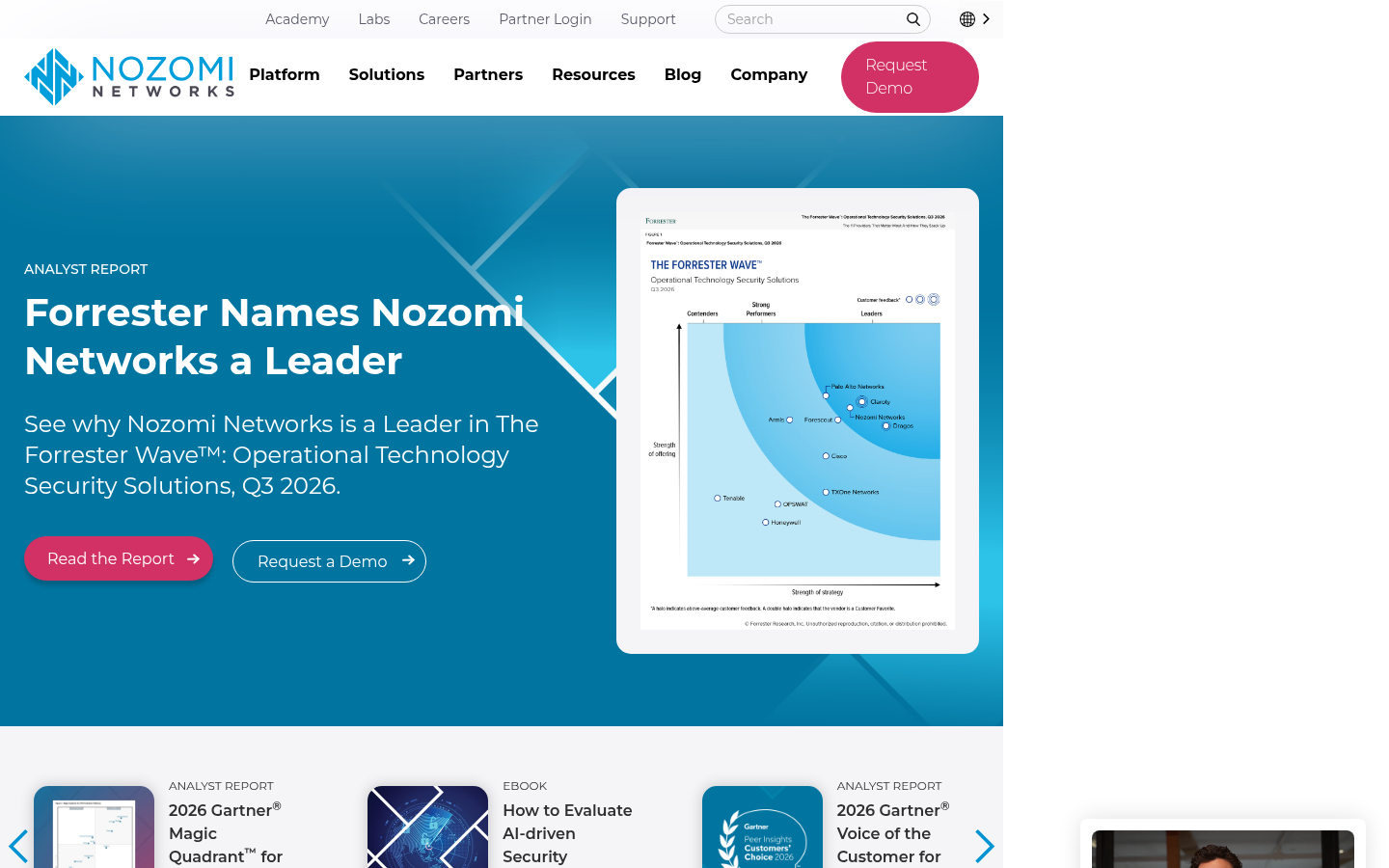
Mitsubishi Electric completed its acquisition of Nozomi Networks on 28 Jan 2026. Nozomi keeps its brand and a vendor-neutral roadmap.
It combines Guardian network sensors, Arc endpoint sensors, and the Vantage SaaS console for OT, IoT, and IT asset visibility, vulnerability assessment, and threat detection.
Key features:
- Guardian passive network sensors
- Arc endpoint sensors
- Vantage SaaS console
- Threat intelligence for OT and IoT
Why we like it:
It scales across many sites with central SaaS management and both network and endpoint collection.
Limits:
Some buyers will weigh vendor neutrality now that an automation vendor owns it.
License or pricing: Commercial. No public pricing.
Armis Centrix
Best for one agentless asset inventory across IT, OT, IoT, and medical
ServiceNow completed its Armis acquisition on 20 Apr 2026. Armis Centrix discovers and monitors IT, OT, IoT, and medical devices without agents, using passive traffic monitoring and safe active queries over native industrial protocols. For segmentation, it shows cross-boundary communications, exports ACLs, and enforces policy through existing NAC.
For ServiceNow customers, the draw is asset and exposure data feeding the same CMDB and workflows IT already uses.
Key features:
- Agentless discovery across device types
- AI-driven asset intelligence
- Vulnerability prioritization
- Segmentation planning, ACL export, and NAC-based enforcement
Why we like it:
It covers the widest device range with one inventory, and the ServiceNow link shortens the path from finding to ticket.
Limits:
Deep OT protocol analysis is narrower than Claroty’s. Post-acquisition packaging is not documented.
License or pricing: Commercial. No public pricing.
Forescout Vistaro platform
Best for enforcing network access across IT and OT devices
Forescout renamed its 4D Platform to the Forescout Vistaro platform in June 2026. The change is branding only, aligning the platform with VistaroAI, its agentic features for risk prioritization, detection, containment, and human-in-the-loop response.
Products include eyeSight for device visibility and network access control, and eyeInspect for OT network monitoring.
Key features:
- eyeSight device visibility and NAC
- eyeInspect OT monitoring
- VistaroAI prioritization and response
- Network enforcement through switches and firewalls
Why we like it:
It can act on the network itself, quarantining or segmenting a device, which most visibility tools only recommend.
Limits:
NAC deployments take planning across switch vendors.
License or pricing: Commercial. No public pricing.
Kai
Best for automating remediation across IT and OT findings
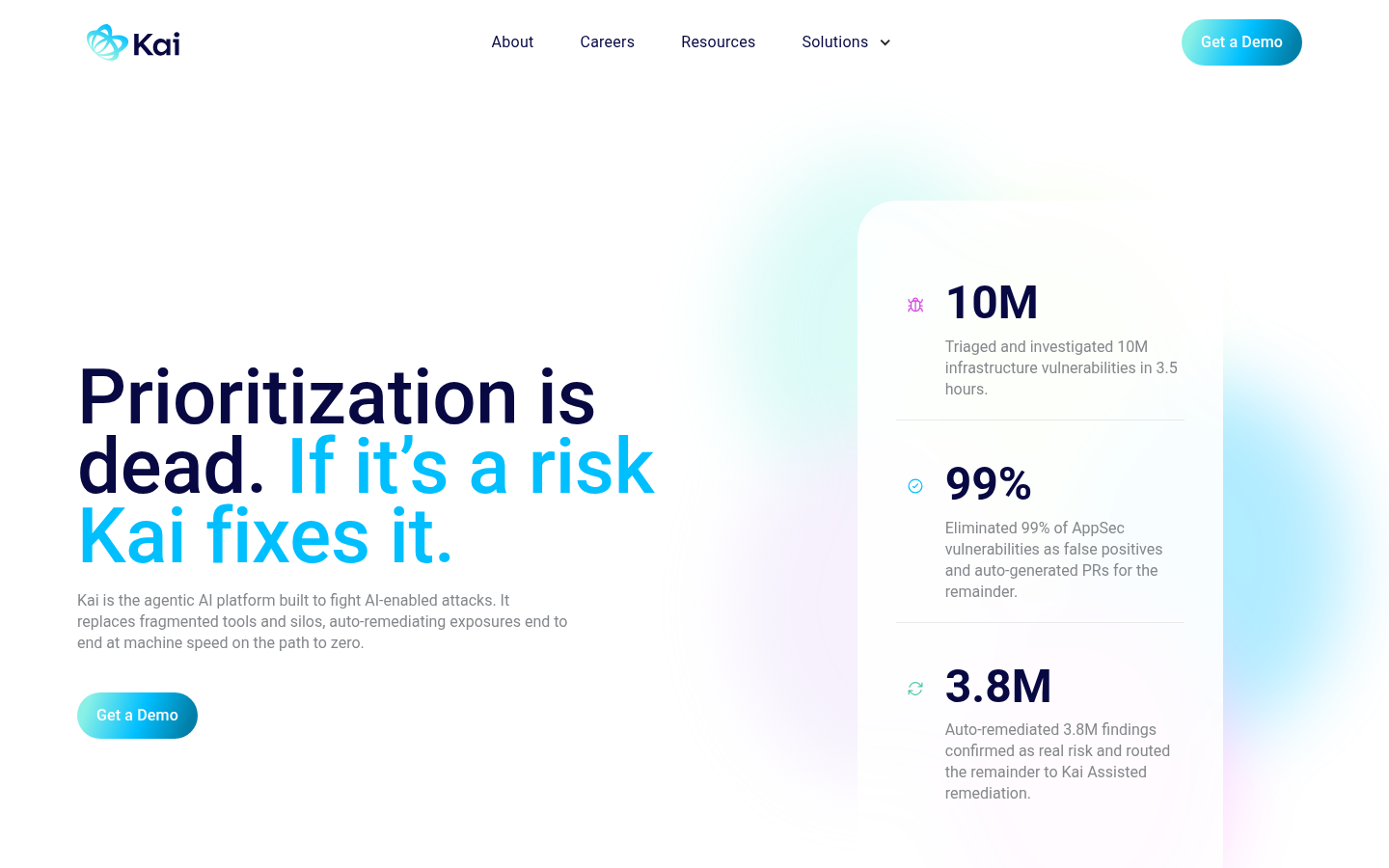
Kai was founded by Claroty co-founder Galina Antova and SecurityMatters co-founder Damiano Bolzoni, and came out of stealth on 10 Mar 2026 with USD 125M across seed and Series A rounds led by Evolution Equity Partners.
Its agents gather context, validate exposures, auto-remediate or route findings, write detections, and push compensating EDR and SIEM rules. Humans set the boundary between autonomous action and review.
Key features:
- Exposure validation across IT and OT
- Auto-remediation within set limits
- Detection engineering from threat intelligence
- Compensating EDR and SIEM rules
Why we like it:
It is built for the backlog problem: thousands of OT findings that nobody has time to act on.
Limits:
Launch-stage. Its own OT collection versus reliance on existing sensors is not documented.
License or pricing: Commercial. No public pricing.
How to choose an IT/OT security platform
- Map the seam. List where IT and OT connect: remote access, historians, shared identity. Ask each vendor what it sees there.
- Decide on action. Kai remediates, Forescout enforces on the network, the others prioritize and route.
- Weigh ownership. Armis and Nozomi now have corporate parents. Check roadmap and contract terms.
- Pilot one site. Measure asset coverage and false positives on a real plant before signing a fleet deal.
What we left out
- OT-only passive monitoring tools: see OT monitoring tools.
- Dragos: strong OT-specific detection and services, covered on the OT monitoring list.
What the internet thinks about IT/OT security
Live threads, quoted for the argument, not the score.
Hacker News · October 2026
“It does have a TCP/IP version as well, but it has no security whatsoever.”
A comment on Modbus in the thread about hacked supermarket fridges. It is why every vendor here monitors OT traffic passively instead of trusting the protocol.
Choose Claroty for deep OT coverage in industrial or healthcare estates. Choose Nozomi for large multi-site OT and IoT fleets. Choose Armis when one agentless inventory should feed ServiceNow. Choose Forescout when network enforcement matters most. Choose Kai when the backlog of IT and OT findings needs automated action and you can pilot a launch-stage vendor first.
FAQs
What is an IT/OT security platform?
A product that discovers, assesses, and protects both IT and operational technology assets, and the connections between them, from one console.